Will 3D printing alter everything?
The advancements in science, seen in the discovery and development of three dimensional printing poses a threat to the market but is a testament to the continuous growth of technology geared towards sustaining humankind’s demands.
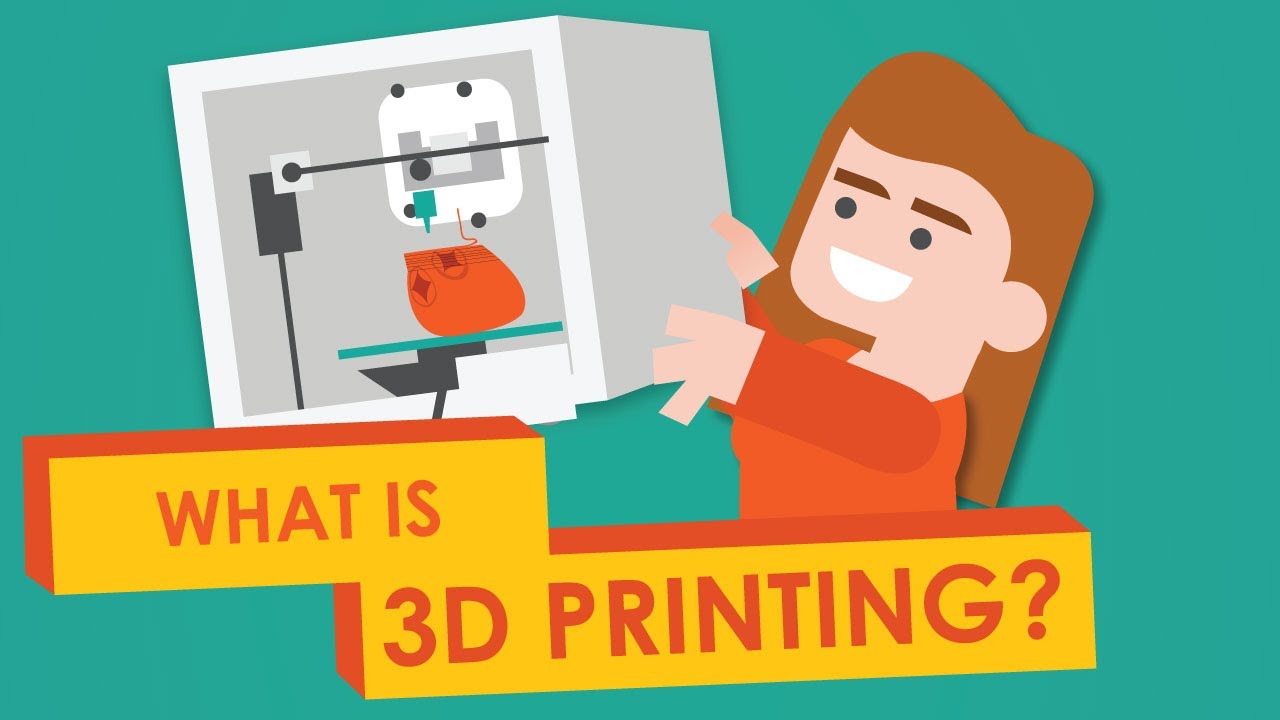
3D printing or sometimes called additive manufacturing, is a powerful tool that is used to create three dimensional objects from a 3D model by printing them through an additive process. With this, we must first take a look at how 3D printing started and revisit the important events in its development. (Rowe, n.d.)
“3D printing is already shaking our age-old notions of what can and can’t be made.”
– Hod Lipson
Today, 3d printing is a powerful tool for creating prototypes and models. One method is 3d printing parts of the house then assembling it in the site and another is 3d printing the full house itself. (Hobson, 2014)
3D Printing has several applications on the electronics industry. There has been studies on the possibility of using this technology in manufacturing of filters and other passive devices such as antennas in a fast, simple and economical manner. It also found applications on the imaging industry particularly on the lenses as shown in the works of Thiele et. al and Zhang et. al. Chinthavali explored the applications in the automotive industry citing Strati, the first 3D printed electric car, as it took its first test drive. It has several applications on the robotics and instrumentation industry as well. (Scaggs, 2013)
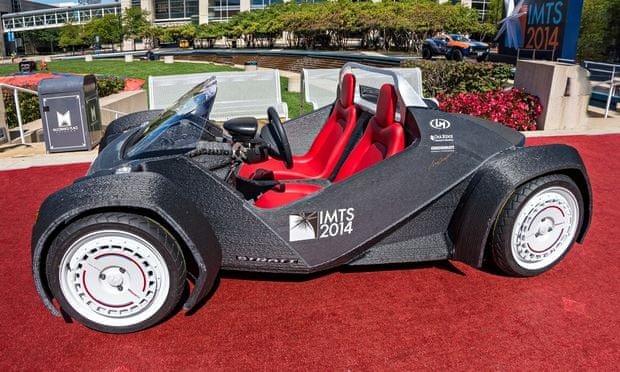
- The Strati
-
The Development of 3D Printing
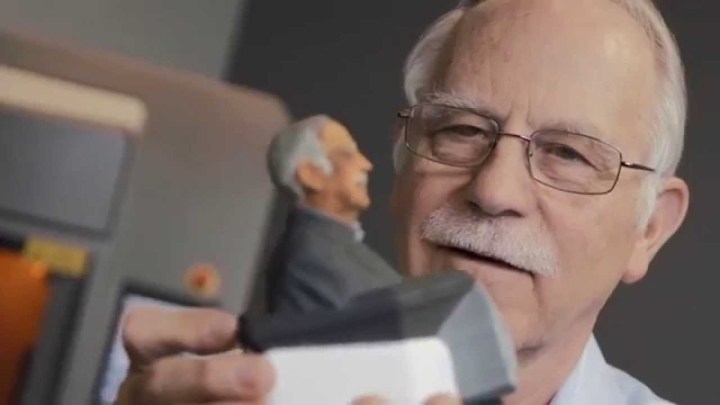
- Charles Hull, inventor of stereolithnography
After the invention of the inkjet printer, the idea of printing using materials instead of ink had already been imagined. Stereolithnography enables a tangible 3D object to be created from digital data. It helped people to not only print with ink but to print with materials. (Rowe, n.d.). It also enables users to create a 3D model using digital data.

One of the most advanced application was done during 1999, where Scientists from Wake Forest Institute for Regenerative Medicine printed a synthetic bladder, coated them with human cells then implanted them in the patient. In 2002, the same institute produces a miniature kidney that can effectively filter blood and produce urine. (Mearian, 2014)

A major breakthrough in prosthetics was also innovated this year when the first person walked on 3D-printed prosthetic leg printed in the same complex structure with all parts including knee, socket and foot.
Moreover, the first blood vessel was printed using a 3D bioprinter through the Bioprinting innovator Organovo relying on Dr. Gabor Forgac’s technology. (Woodford, 2016)
In 2011, the world’s first 3D-printed aircraft was designed and flown by the engineers at the University of Southampton. Also that year, technology paved a new way by introducing a new and less expensive manufacturing option for jewelry STS: Advancements on 3D Printing 11 designers. “Materialise” became the first 3D printing service worldwide to offer 14K gold and sterling silver as materials. (Walker, 2013)
A customized three-dimensional prosthetic lower jaw was made by LayerWise in 2012 by the doctors and engineers in the Netherlands using a 3D printer. To promote the growth of new bone tissue, this technology is currently being explored. (Stratasys, n.d.)
The full potential of this technology has yet to be unveiled to us. Who knows, this might be the centerpiece of what our future will become. (Petrosanu, 2013)

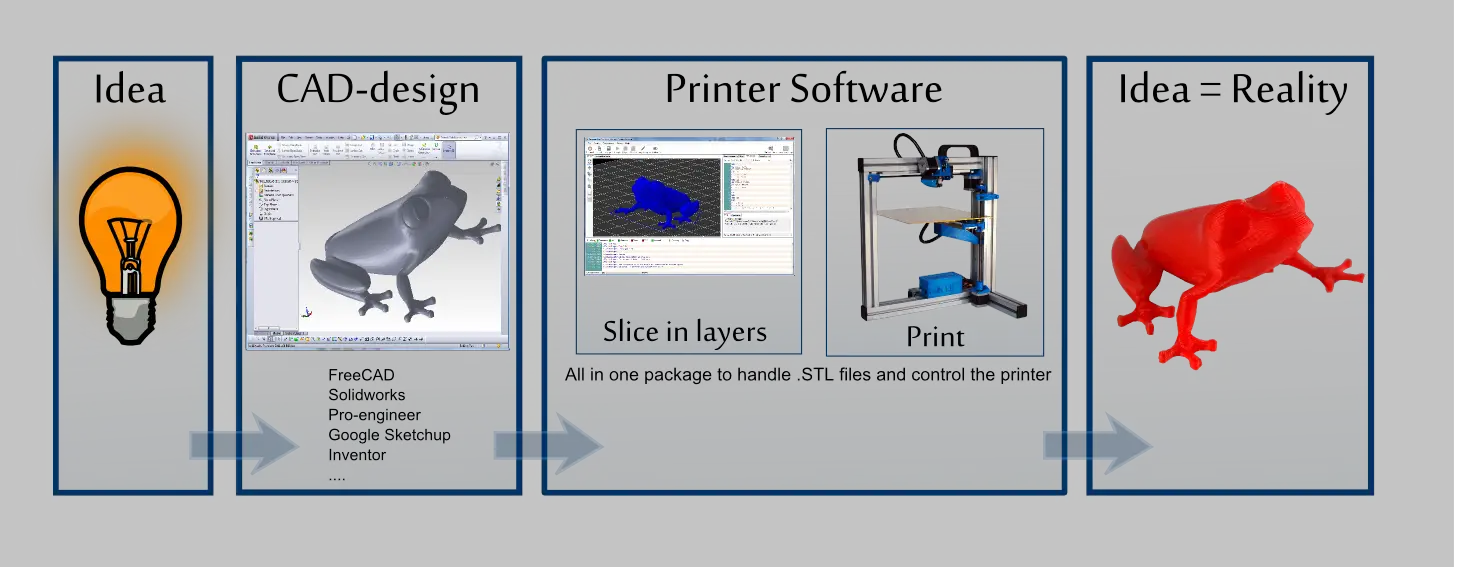
3D printing has proven to be a valuable asset to have in almost all types of industries. In the field of medicine, artificial organs can be manufactured and customized to be made readily accessible to the patients in dire need of an organ transplant or any form of medical assistance. (Chowdhry, 2013) Similar to the field of medicine, mechanical manufacturers are able to save valuable time by being able to print copies of prototypes and parts needed. In terms of marketing manufactured parts, 3D printing can save inventory space due to fact that all the parts are to be made on demand by the consumer. (Sculpteo, n.d.)
3D printing technology provides a much simpler and faster way of manufacturing products. It is a powerful tool for creating prototypes and models which is tremendously helpful STS: Advancements on 3D Printing 15 to persons such as designers and engineers who are physically creating something. These models are created as close as possible to the design and because of this, even the most complex things in the design is possible unlike in traditional hand-crafting where only a few individuals/artisans are capable of doing it. Also, 3D printing saves a lot of time and one could redesign and produce it again without having to wait for long periods of time.
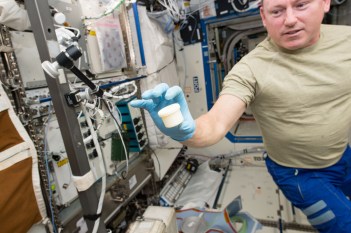 Aerospace and aeronautic design has always been a tremendous feet especially because of the multimillion dollar investments going towards it. As such, NASA has added 3D printing to their space shuttles so that their astronauts are able to print the tools they need and customize it at the same time. (Wall, 2016)
Applications on architecture includes producing study models and promotional scale models to quickly materialize and visualize ideas instead of manually doing it. To add a more personal touch to 3D printing, clothing manufacturers are able to print clothes that have a certain design and and an exact size or dimensions the consumer would want.
Finally, in the field of education, where 3D printing can be used to the fullest, 3D printing can give a significant impact to how lessons could be learned. Such lessons that may greatly be in need of of 3D printing in the classrooms would be math and it’s geometric rules, history and prehistoric events, art and science structures. (“3D printer buyers guide,” 2016)

The current state of 3D printing?
One of the most important implications of the advent of 3D printing is the increased speed at which goods could be manufactured. Richard A. D’Aveni suggests that this may eventually mean household-level production of certain goods, although it is clarified that consumers will have to pay for the raw materials and the software files necessary for printing. (Mearian, 2014) That said, companies would have to find ways in order to make the technology work for them, counteracting the idea that consumers could become producers on a household level. In relation to this, D’Aveni suggests one of the biggest major implications of this is that China would fall as the world’s “manufacturing powerhouse” (2013).
In 2014, HP, a well-known information technology company, announced that it would be “entering the 3D printing market with an industrial machine that is 10 times faster and 50% STS: Advancements on 3D Printing 19 cheaper than current systems” (Mearian, 2014). The general response to HP’s announcement was worry for the smaller companies who were beginning to make names for themselves in the 3D printing market: many of them responded, however, by stating that they were not threatened by HP’s entry into the market, instead seeing it as an opportunity to make the 3D printer more well-known. HP’s entry into the market could already be a step towards D’Aveni’s point of the market leaning away from China and looking closer technologies and sources.
In the Philippines in particular, there are a number of 3D printing service providers,
although these typically use cheaper printing machines to achieve mid-to-low quality prints. Taylor (2014) reports that there are six 3D printing services listed in 3D Hubs, the largest global network of 3D printers, here in Manila. (Petrosanu, 2013)
3D Printing’s Downside
Studies claim that 3D printing machines require a significant amount of electricity to operate. Moreover, when compared to conventional injection-moulding, 3D printers using heat or lasers to melt plastic often consumes 50-100 times more electricity in producing the same product (Kovac, 2013). Also, the use of plastic as the main material for 3D printing results in unhealthy air emissions as do any plastic manufacturer. (Women in Europe for a Common Future [WECF], 2004)
Since it can be used to create replicas of desired objects, it provides an avenue for piracy, reproducing intellectual properties for profit. Even guns, weapons, drugs and chemical weapons can be printed at reduced costs and at fast rates. (Vogel, 2016).
Another issue to review is the topic of unemployment. Most manufacturing businesses would require human labor for most of its production process however, since 3D printing is mainly a computer-controlled technique, there is a possibility of unemployment. (Petrosanu & Pirjan, 2013).
Findings – Isko/Iska on 3D Printing 
The group did a convenience type of sampling and surveyed a total of 26 students where:
- 92% of the students believe that 3D printing will bring a number of benefits in the society and will be practically useful.
- 65% foresee the technology of 3D printing on having legal and ethical issues in the future.
- 85% agrees that 3D printing will become commercially viable in the future.
- 69% thinks that the Philippines and its industries should invest in the development of their own 3D printing capabilities.
- 54% believes that 3D printing should not only be limited to industries, that is, it should also be available for personal use.
In conclusion…
3D Printing is a product of how science and technology have worked together throughout the years to be able to widen our knowledge, improve the lives of people, and to reach a sense of fulfillment that comes with immense planning, research and execution. The fact
that 3D Printing is able to make the tasks of designers, engineers, food and medical researchers easier and more fruitful proves that the future of 3D Printing has no boundaries.
Even if there are potential drawbacks, like the harm it can cause to the
environment and as an avenue for piracy, as long as we find alternative ways that involve the
implementation of appropriate and cost-saving solutions, and more eco-friendly policies stricter
legislation laws for monitoring, and creation of more jobs in this industry, we could slowly begin
to turn to 3D Printing.
With this, now we can finally say
that the only limitation that we will have is our own imagination.
Some limitations
The study was conducted only on a limited sample ( N = 26) who were all students of the University of the Philippines-Diliman, because of this, the statistical findings may have a larger probability of being inaccurate. Our study is also limited to the views and opinions in Philippine context and therefore cannot be used to represent other countries or states as a tool for their own research. Furthermore, the age of the people may have a significant factor as to why they approve of 3D printing. Lastly, our knowledge about 3D printing is solely based on research on the internet and also from various sources.
 Site Title